
Holding Space for Healing: Grief, Intimacy & the Journey Through Breast Cancer

Introduction

October marks Breast Cancer Awareness Month, a time to honor survivors, remember those we’ve lost, and bring attention to the realities of living through and beyond breast cancer.
For BIPOC women, the journey can carry additional layers—medical disparities, cultural silence around illness, and the emotional weight of navigating identity, family, and survival all at once. While much of the conversation focuses on treatment and recovery, the emotional and psychological healing often remains unseen.

This is a space to honor that part of the story—the grief, the reconnection, and the deep inner healing that unfolds along the way.


Grief Beyond Loss

Grief doesn’t only come after loss—it often begins long before. For many women facing a breast cancer diagnosis, anticipatory grief surfaces early: the fear of losing health, energy, independence, or even a sense of femininity.

There’s also body grief—the mourning of physical changes that may alter how one feels in their own skin. Hair loss, mastectomy scars, or changes in sensation can impact how women see themselves and how they feel seen by others. These shifts can challenge one’s identity, asking difficult questions about beauty, worth, and wholeness.

Allowing space to acknowledge and process these emotions is a vital step toward healing.


Relationships & Intimacy

Cancer doesn’t just affect the body—it ripples through relationships. For many, the journey brings both distance and closeness in unexpected ways. Romantic and sexual intimacy can be impacted by physical changes, fatigue, and emotional overwhelm.

Therapists and supporters can help clients navigate these delicate spaces—honoring vulnerability, encouraging open communication, and guiding partners toward reconnection rooted in empathy rather than expectation. Healing intimacy often means redefining it: shifting from performance to presence, from fear to trust, from shame to self-acceptance.


Inner Child Healing

Illness can awaken old wounds. For many women, the breast cancer journey becomes a mirror reflecting past traumas or unhealed parts of the inner child. Feelings of helplessness, fear of abandonment, or the need to “stay strong” for others may resurface.

Therapeutic work here can be deeply transformative. By nurturing the inner child—offering her compassion, safety, and permission to rest—clients can reconnect to a sense of softness and self-love that supports their physical and emotional recovery.


Therapeutic Support

Therapy provides a safe and sacred space to unpack the layers of grief, anger, and transformation that accompany breast cancer. Within this space, clients can express without judgment, rebuild trust in their bodies, and learn tools for emotional regulation and resilience.

At She Heals Journey, our mission is to support BIPOC women with culturally responsive care that honors both collective and individual experiences. We hold space for healing that acknowledges heritage, identity, and the unique intersections of womanhood and survivorship.


Conclusion

Healing from breast cancer is not a linear path—it’s a journey of remembering your strength, redefining your beauty, and reclaiming your peace.

Whether you are walking through treatment, supporting a loved one, or seeking deeper emotional healing, know that you are not alone.

Take the next step:

  • Share this post to raise awareness.
  • Explore our resources for BIPOC women navigating breast cancer.
  • Or reach out to She Heals Journey to book a session and begin your healing process today.

Together, we hold space for healing—mind, body, and spirit.

She Heals Team xoxo


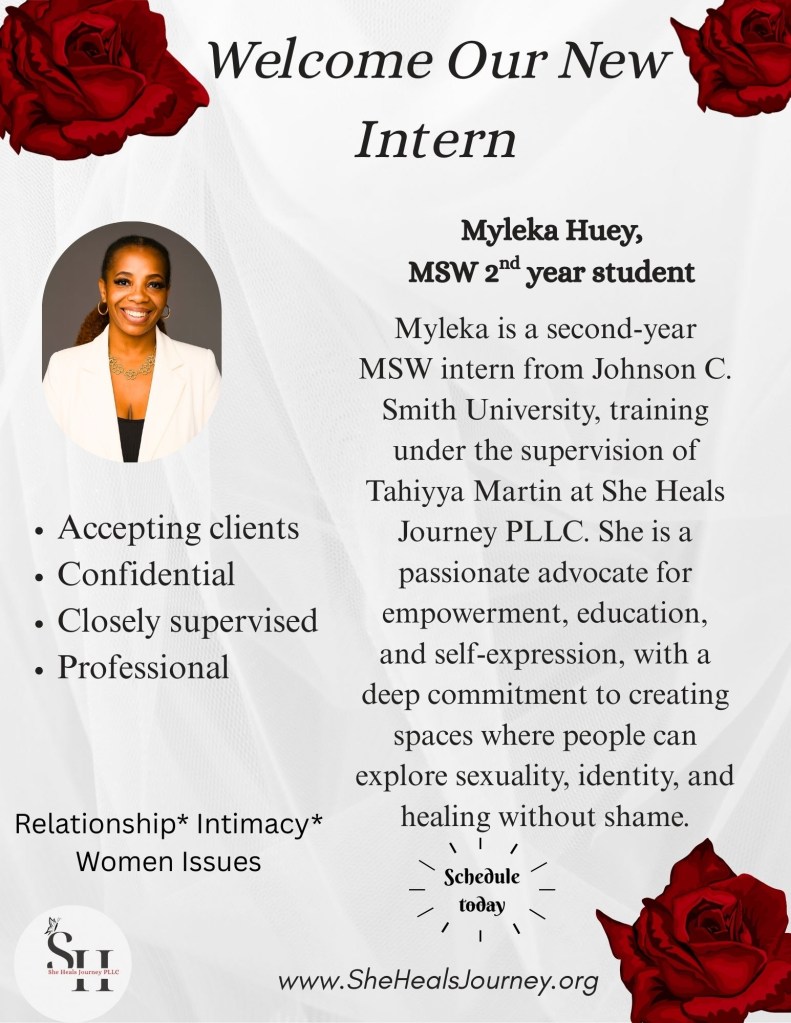
We are excited to share that our intern is currently accepting new clients.

Contact us today to schedule your consultation with our intern.

When Seasons Change: How Connection Supports Mental Health & Intimacy

As summer fades and the air turns crisp, we find ourselves standing at the threshold of Fall—a season defined by transformation. Trees shed their leaves in quiet preparation for winter, the light shifts, and the rhythm of life slows. Fall reminds us that change is not only inevitable, but natural. It offers a profound metaphor for the emotional and psychological transitions we all experience. Just as the seasons cycle, so too do our inner landscapes.

For many, this time of year can stir feelings of melancholy, loneliness, or even despair. The shorter days and cooler nights may invite reflection, but they can also amplify isolation. It is during these tender transitions—when we feel most vulnerable—that the power of connection becomes especially vital.


Connection as a Lifeline

Human beings are wired for connection. Intimacy, in its many forms—emotional closeness, physical touch, shared presence—serves as a buffer against the heaviness that life sometimes brings. Research consistently shows that strong social bonds are protective factors for mental health. Whether it’s a heartfelt conversation with a friend, a moment of shared silence with a partner, or even the warmth of a hug, connection reminds us that we are not alone in our struggles.

When intimacy is nurtured, it becomes a safe harbor—a place where our inner worlds are seen and accepted. This doesn’t always require deep words or grand gestures; sometimes, simply being with someone in mutual presence is enough. In times of emotional transition, especially during seasons of loss, uncertainty, or grief, the presence of others can be the thread that keeps us grounded.


The Danger of Disconnection

Without connection, difficult transitions can feel unbearable. Loneliness, if left unspoken, can evolve into despair. As Fall nudges us inward, it’s essential to be mindful of those who may be struggling silently. Mental health challenges don’t always look like what we expect. Sometimes they appear as withdrawal, irritability, or emotional numbness. These moments call for gentleness—with ourselves and with others.

We can’t always prevent pain, but we can respond with presence. A check-in text, an invitation to walk, or a simple, “How are you really doing?” can open doors that seemed long closed.


Grounding Practices for Seasonal Transitions

In times of emotional shift, grounding ourselves through connection and intentional practices can restore balance and clarity. Here are a few ways to stay rooted:

  • Practice intentional presence: Turn off distractions during conversations. Make eye contact. Listen without trying to fix.
  • Create rituals of connection: Share meals, go on nature walks, or start a journaling practice together.
  • Name your feelings: Use simple language to express your emotional state. “I feel overwhelmed today,” is enough.
  • Touch base with yourself: Pause and ask, “What do I need right now?” A breath? A call? A walk? A cry?
  • Seek help when needed: You don’t have to carry it all alone.

You Are Not Alone

If you or someone you know is navigating despair or crisis, support is available—24/7, without judgment.

  • 988 Suicide & Crisis Lifeline: Call or text 988
  • Crisis Text Line: Text HOME to 741741
  • Trevor Project (for LGBTQ+ youth): Call 1-866-488-7386 or text START to 678678
  • Trans Lifeline: 1-877-565-8860

As the leaves fall and the world quiets, may we be reminded that letting go is not an end, but a beginning. Let us reach inward and outward—with compassion, courage, and connection. Because when seasons change, we need each other more than ever.

She Heals Team xoxo


What’s new at She Heals Journey

Ms. Huey is currently accepting new clients pro bono. Contact us here

The Sexual Trauma Recovery Intensive is in October. Learn more here

She Heals Journey August Newsletter

Theme: Embodied Liberation & Pleasure Practices
“Caring for myself is not self-indulgence, it is self-preservation, and that is an act of political warfare.” – Audre Lorde


Welcome August,

August is an invitation to slow down, listen inward, and return to the wisdom that lives within your body.
Here at She Heals Journey, we believe healing is not just something you think through—
it’s something you feel into.
It’s the soft exhale after holding your breath for too long.
It’s the moment your shoulders relax when someone sees you fully.
It’s the subtle warmth that reminds you: you’re still here.


This Month’s Focus: Coming Home to the Body

For many of us—especially those carrying trauma, grief, or shame—the body can feel like an unsafe place.
You may have learned to disconnect in order to survive.
But embodiment is not about pushing past discomfort. It’s about gently reclaiming the parts of yourself you were once told to ignore, numb, or silence.

This month, we’re exploring how pleasure, presence, and body-based practices can help you rebuild safety from the inside out.

Whether you’re just beginning or deep in your healing, remember:
Pleasure isn’t a luxury. It’s a form of restoration.


August Blog Feature:

“Awakening the Erotic Body: How Pleasure Supports Trauma Recovery”
In this piece, we explore how trauma disconnects us from our sensual, feeling selves—and how healing practices like grounding, breathwork, and body-led rituals can help us return.

Read it here: [Blog Link]
—-Reflection Prompt: What does it feel like when I am safe in my body?


Embodiment Practice of the Month

The “Anchor & Aliveness” Exercise

  • Sit or lie down in a quiet space.
  • Place one hand on your belly, one on your chest.
  • Breathe deeply. Ask: Where do I feel grounded?
    Where do I feel alive?
  • Stay with the sensations. Let them speak.
    This practice helps regulate your nervous system and opens the door to deeper self-connection.

What’s New at She Heals Journey

Therapy Openings Available:
We’re accepting new clients for September. If you’re ready to explore body-based or trauma-informed healing, now is a great time to begin.

We also have our own intern that will be ready to accept new clients at reduce rates starting 8/18/2025.
[Contact]

Upcoming Sexual Trauma Recovery Group:
Our new group will begin in September. The Sacred Path to Sexual Trauma Healing.
[Learn more and apply for our first cohort]


Gentle Reminders

  • Healing doesn’t mean you’re always at peace. It means you know how to return to yourself.
  • Your body is not the enemy. It is the site of your freedom.
  • There is no timeline for coming home. Move at the pace of safety.

You are allowed to be soft. You are allowed to be whole.
And you don’t have to do it alone.

In care and compassion,
She Heals Journey team xoxo
shehealsjourney.org

Awakening the Erotic Body: How Pleasure Supports Trauma Recovery

When we hear the word erotic, many of us immediately think of sex. But the erotic body is so much more than sexuality—it is the part of us that is deeply alive, fully sensing, present, and connected. It’s the body that breathes, feels, aches, tingles, moves, and responds. It is the home of our intuition, creativity, and desire—not just for intimacy, but for life itself. (Read Audre Lorde’s essay The Uses of Erotic)

In the context of trauma recovery, the erotic body offers a radical invitation: to reclaim pleasure not as indulgence, but as medicine.


Trauma and the Disconnection from the Body

Trauma can fracture our relationship with the body. Whether from a single overwhelming event or chronic stress, the nervous system may respond with survival strategies like numbing, dissociation, or hypervigilance. Over time, we may stop feeling safe inside our own skin. Sensation becomes muted or overwhelming. Pleasure may feel inaccessible or even dangerous.

In this way, trauma often severs us from the erotic body—our embodied aliveness—and replaces it with fear, shame, and disconnection.


What Is the Erotic Body?

The erotic body is not just about sex—though it includes sexuality. It is the body awakened to its own capacity to feel. To feel warmth, softness, tension, release. To experience the richness of sensation, the joy of movement, the sweetness of a breath drawn deeply.

Audre Lorde described the erotic as a “resource within each of us that lies in a deeply female and spiritual plane, firmly rooted in the power of our unexpressed or unrecognized feeling.” This power can guide us back to ourselves, helping us navigate life with more truth, creativity, and agency.


Pleasure as a Path to Healing

When we begin to explore grounding and sensual practices, we aren’t just trying to “feel good”—we’re building new neural pathways that tell the body: You are safe now. You can trust this moment. You can come home.

Practices that support this reconnection might include:

  • Touch – gentle self-massage, holding your own hand, feeling texture or temperature
  • Breath – slow, conscious breathing to ground and regulate the nervous system
  • Mindful movement – dancing, stretching, or walking with presence and curiosity
  • Sound – humming, sighing, or making vocal sounds to release tension
  • Stillness – tuning into subtle internal sensations without judgment

These simple acts can begin to reawaken sensation, helping us feel more grounded, embodied, and empowered. With time, the body learns that pleasure is not a threat—it is a sign of life.


Reclaiming Agency Through Sensation

One of the most insidious impacts of trauma is the loss of agency—the sense that we are in control of our own bodies and lives. By reclaiming pleasure, we begin to rewrite that narrative.

When we choose to slow down, to breathe, to notice what feels good, we are choosing ourselves. We are saying: My body matters. My feelings matter. I am worthy of joy.

This isn’t about bypassing pain or pretending everything is fine. It’s about honoring the full spectrum of human experience—including pleasure—as part of healing. It’s about allowing the erotic body to speak, move, and guide us.


Final Thoughts

Reconnecting with the erotic body is not always easy, especially for those carrying trauma. But it is profoundly worth it. Pleasure, in its many forms, becomes a quiet rebellion—a way of reclaiming aliveness, moment by moment.

In a world that often numbs, rushes, and disconnects, choosing to feel is a courageous act. Choosing to feel good? That’s revolutionary.

How are you choosing to feel good?

Tahiyya Martin


Would you like to explore more on Sexual Trauma Recovery?

Tahiyya Martin is offering her first group cohort next month titled Sexual Trauma Recovery: The Sacred Path to Sexual Trauma Healing. Learn more here.

If you or someone you know is interested please share. Ms. Martin wants to keep this group safe, intimate, and sacred so she is only offering 8 spaces for women.

In the meantime Happy August!

Where We First Learned Love: Unpacking the Past to Heal Our Relationships

Love.
We crave it.
We chase it.
Sometimes we fear it.

But very few of us pause long enough to ask: Where did I first learn what love is supposed to feel like?

For many of us, that blueprint was drawn long before our first kiss or romantic relationship. It was shaped in our families—through what was spoken, what was withheld, what was modeled, and what was broken.


Our First Love Lessons

Our family of origin is our first classroom for relationships. Whether your upbringing was nurturing or neglectful, chaotic or calm, it left an imprint. These early experiences planted unconscious beliefs about how love should look and feel.

  • If you had to earn affection, you might now equate love with over-giving or self-abandonment.
  • If love was inconsistent, you might cling tightly or fear it won’t last.
  • If boundaries were violated, you may struggle with trust or intimacy.
  • If emotions were dismissed, you may feel unsafe expressing needs.

Even the unspoken rules—“Don’t cry.” “Be strong.” “Love hurts.”—can become silent scripts that show up in adult relationships, quietly dictating how we give, receive, or avoid love altogether.


It’s Not Just Trauma, It’s Narrative

It’s not always about one major trauma. Sometimes it’s the small, repeated moments that quietly teach us who we need to be to feel loved—or to stay safe. Or what love actually looks like.

We internalize those lessons into narratives like:

  • “I have to take care of everyone else.”
  • “I’m too much.”
  • I’m not enough
  • “I don’t deserve real love.”
  • “If I’m vulnerable, I’ll be hurt.”
  • If someone shows me too much attention then it means they have an agenda and I’ll be hurt”.

And these narratives don’t just stay in the past—they show up in how we date, argue, trust, set boundaries, accept and give love, or shrink ourselves in our relationships today.


Healing Means Rewriting the Script

The good news?
We can learn a new love language.
We can update the narrative. We do not have to stay in the same storyline anymore.

Healing begins with awareness—unpacking our early messages around love, safety, connection, and identity. It continues with compassion—offering ourselves grace as we meet the younger parts of us that still carry those early wounds. And it deepens with intention—choosing to show up differently in our relationships, day by day.

This isn’t just about romantic love. It’s about learning how to love yourself, your inner child, and others with more clarity, confidence, and care.


Let’s Do This Together: Join the Workshop

If this resonates, I invite you to join Tahiyya Martin for an upcoming experience that is more than just a workshop—it’s a reclamation.

Girls ^(and boys) Need Love Too
Sunday, August 10 | 1PM–4PM EST
Virtual + In-Person (North Carolina)

In this 3-hour coed experience, we’ll explore:

  • How our families shaped our love blueprint
  • How to recognize (and shift) unhelpful relationship patterns
  • How to love and be loved in ways that are secure, authentic, and liberating

This is a space for healing, growth, and real talk—for those ready to get honest about the past and hopeful about what’s possible next.

→ Reserve your spot here: [Registration Link]
Come with your heart. Leave with clarity, connection, and tools for deeper love.


You deserve love that feels safe, whole, and free.
Let’s remember how to give and receive it—together.

With heart,
She Heals Team xoxo


And if you find that you are ready to do some deeper work Ms. Martin has an upcoming Sexual Trauma Recovery Group coming in September. There is room for 8 participants as she would like to keep the space sacred and intimate. Check out the details here.

Grief & Grace: Navigating Loss While Holding Life

Today is my father’s born day.

It’s strange — the way time folds in on itself when you’re grieving. My dad transitioned the week of Thanksgiving last year, just days before my daughter turned eight. Grief and celebration showed up at my door like uninvited guests, demanding I entertain them both. I tried. I really did. But I couldn’t pretend joy when my heart was hollowing out.

What anchored me, oddly enough, was my daughter’s honesty. “I don’t want to see you cry,” she told me. “Your tears scare me.”

And I got it. I really did.

I was five when I experienced my first death. I remember the deep, bone-shaking cries of my great-grandmother and mother. Their grief etched itself into the walls and into my memory. I understood then what my daughter meant now — how grief doesn’t just speak, it echoes.

At first, I wanted to honor her request, to be strong and hold it in. But I couldn’t. I was already bracing myself for my siblings, for the whirlwind of preparing for his janazah, for the silence left in his place. So I asked for help — something I don’t do easily.

I reached out to my ex-husband and his fiancée. And they showed up. They stood in for me and cared for our daughter so I could fall apart in peace. It was one of the hardest decisions I’ve made — not because I didn’t trust them, but because I’m not used to letting go, not used to being the one held.

The people around me meant well. They offered condolences, kind words, soft smiles. But I didn’t realize what I truly needed until I attended an event where someone — without knowing much — created an impromptu grief circle for me. The hug I received was like breath after drowning. It gave me permission to stop performing strength. I sobbed until I became that five-year-old girl again.

My partner held physical space — a quiet presence, a warm body — but he couldn’t hold the emotional space I craved. And I’ve come to understand, that’s not uncommon. Grief makes many people uncomfortable. Vulnerability terrifies some. And still, grief needs a witness.

So today, in honor of my father and every part of me that is still grieving, I offer you five gentle ways to navigate the loss of a loved one — not just survive it, but move through it with presence and grace:


1. Give Yourself Permission to Feel

You do not need to be strong. You need to be real. Grief is not something to conquer — it’s something to companion. Let your tears fall. Let your voice shake. Let yourself feel it all. This is not weakness; it’s release.

2. Ask for Help — Even If It’s Hard

Whether it’s a family member, a friend, or a co-parent, lean into support. Let someone hold the everyday responsibilities while you tend to your heart. You don’t have to carry it all. You were never meant to.

3. Create or Seek Out Sacred Grief Space

If those around you don’t know how to hold your sorrow, find a space that can. Whether it’s a grief group, a circle, a therapist, or a trusted spiritual guide, find somewhere you can be witnessed in your whole truth.

4. Honor Their Memory in Your Own Way

Light a candle. Cook their favorite meal. Write them a letter. Speak their name. You don’t have to follow any rules for remembrance — just let it be real. This helps your grief find rhythm and meaning.

5. Let the Healing Be Nonlinear

Some days you’ll laugh. Some days you’ll break. Some days you’ll do both in a span of ten minutes. There’s no timeline, no “done” date. Let yourself grieve as you are, without expectation or apology.


To everyone who is grieving: I see you. I know the weight you carry. And I know the courage it takes just to breathe some days.

Today, I grieve. I remember. I soften. And I write this not just for me, but for all of us learning how to live with the absence of someone we love.

May we be held. May we be witnessed. May we be whole — even in our brokenness.

With love,
Tahiyya Martin LCMHC, LPC, A grieving daughter xoxo

Who’s Really Arguing? Understanding the “Parts” That Show Up in Conflict

By Tahiyya Martin LCMHC, LPC

Relationships are some of the most beautiful—and challenging—mirrors we have (I’ll do a blog on mirrors soon). Especially when conflict arises, it’s easy to feel confused, misunderstood, or even disconnected from the person we love the most.

When I work with couples in therapy, one of the most helpful tools I teach is something called parts work. Don’t worry—this doesn’t mean you’re broken into pieces. In fact, this approach helps us understand that all of us have different “parts” or sides of ourselves that show up in certain moments, especially under stress, fear, or emotional threat.

What Is a “Part”?

Think of a part like a role or voice inside you. For example, you might have a part that wants closeness and connection—and another part that gets defensive when you feel hurt. You might have a part that shuts down to keep you safe, and another part that gets loud to be heard. These are all valid, protective parts of you.

The same goes for your partner. They, too, have parts that are trying to help them cope, connect, and survive—though sometimes these parts clash in ways that feel frustrating or painful.

Remember we all come into the relationship with our own challenges, traumas, and experiences. So it is only fitting that we all also have parts. This is not a one sided concept in relationships. 

In Conflict, It’s Often Our Parts Arguing—Not Our Whole Selves

When you’re in a disagreement with your partner, it’s often not your full, adult, grounded self that’s reacting—it’s a younger, protective, or hurt part. Maybe it’s the part of you that didn’t feel seen growing up. Or the part of you that learned to please others to avoid rejection. Maybe it’s the part that panics when you sense emotional distance.

If you pause and ask yourself, What part of me is showing up right now?, you may be surprised by what you discover.

And if you and your partner both get curious about your parts, you can shift from blaming each other to understanding why you’re reacting the way you are—and what that part really needs. In my sessions you’ll often hear me ask, “what does that part need?”. 

A Common Example

Let’s say one partner pulls away during an argument, and the other partner gets louder and more intense. On the surface, this might look like one person “shutting down” and the other “being too much.”

But underneath?

  • The withdrawing partner might have a part that learned to go quiet to avoid making things worse.
  • The pursuer or louder partner might have a part that gets big and expressive when they’re scared of being left or not cared for.

Once both partners can name the parts that are showing up, we can begin to work with those parts more gently, instead of fighting from them. The goal is to integrate and allow the grounded adult to appear in the relational space.

So How Do We Work With These Parts?

Here’s what I often encourage couples to practice:

  1. Pause and Notice: Take a breath and check in with yourself. What part of you is present right now? Is it angry? Hurt? Protective? Needing something?
  2. Speak for the Part, Not From It: Instead of saying, “You never listen to me!” try “A part of me feels really unheard right now.” This small shift can help your partner stay open instead of getting defensive.
  3. Get Curious, Not Critical: Ask your partner with compassion, “What part of you do you think is showing up?” This helps create space for dialogue, not defensiveness.
  4. Name the Need: Every part has a need. Maybe it needs reassurance, comfort, space, or just to feel seen. When we can name the need, we move from reaction to repair.

The Beauty of Parts Work in Relationships

The goal isn’t to get rid of your parts—these parts developed for good reason. These parts got us through some tough times as kids. They just don’t have a place as we have done our healing and want to show up in the grounded adult space. The goal is to understand them, soften them, and learn to stay connected even when they show up.

In therapy, I hold space for each partner’s inner world—so the relational space becomes a place of healing, not just managing conflict. And over time, couples begin to see each other not as “the problem,” but as humans with histories, protectors, and needs—all trying to love the best they can.


Closing Note:

If this resonates with you and your partner, know you’re not alone. Conflict is not a sign of failure—it’s often an invitation to grow together. If you’re curious to explore how parts work can deepen your connection, I’d be honored to walk with you on that journey.

With care and love,
Tahiyya Martin
Relationship, Sex, & Grief Therapist | She Heals Journey PLLC

Healing in the Heat: A Summer of Softness & Strength

Summer’s warmth invites both deep transformation and gentle renewal. This June, we’re embracing the balance of tender rest and courageous growth—a journey that mirrors the season’s energy.


What’s New with She Heals

  • Monthly newsletter blog to keep you updated on what’s happening at She Heals, including our latest events, featured stories, and helpful tips to support your journey and enhance your experience with us.
  • Featured Blog Post:
    Sunlight & Shadow: How Summer Can Help Us Grieve (June 5, 2025) guides us through using summer’s light and heat to honor grief—finding solace in nature’s rhythms. It’s a heartfelt invitation to transform sorrow into soft strength. Read more

Upcoming Events & Programs

  • rhythm and flow movement class
    1st Sunday of the month at Zenchi Lounge. Class is facilitated by our very own Tahiyya Martin. Reserve your spot today
  • Reclaiming Your Power: The Sacred Path to Sexual Trauma Healing: An in person 8 week sexual trauma recovery group for women seeking guided healing and reclamation of pleasure & power. Open to NC & SC residents only. Facilitated by Tahiyya Martin LCMHC, LPC Group begins September 2025. Applications open in July 2025.

June Journal Prompt

Journal Reflection: Soft Strength in the Heat
Reflect on how the summer heat might illuminate hidden emotions or memories. Where in your body do you feel warmth or tension? What voices emerge in the quiet heat? How can you honor those whispers and let your inner strength rise?
Capture your reflections, breathe softly, and let the season guide your healing.


Therapist’s Note

Summer isn’t just bright—it’s a teacher. The heat can stir what’s been buried, but it also offers clarity and renewal. As you move between rest and resilience, remember: softness is strength. You are not just surviving—you’re becoming.


Grow with She Heals

  • New to our community? You can subscribe anytime for instant updates.
  • Don’t miss out—visit our blog for collection of reflections and guidance on your healing journey.

[Check out the blog]


Closing Thought

This June, may your journey be filled with the tender glow of self-compassion and the fierce roots of inner power. In heat and in hush—you are held, you are healing, and you are becoming.

With reverence and care,
Tahiyya & the She Heals Journey Team


Ready to continue your journey?
Explore our blog and subscribe today.

She Heals Journey

Stay informed with curated content and the latest headlines, all delivered straight to your inbox. Subscribe now to stay ahead and never miss a beat!

Skip to content ↓